
A condition declared “endemic” enrages no one. What enrages is the word that names it
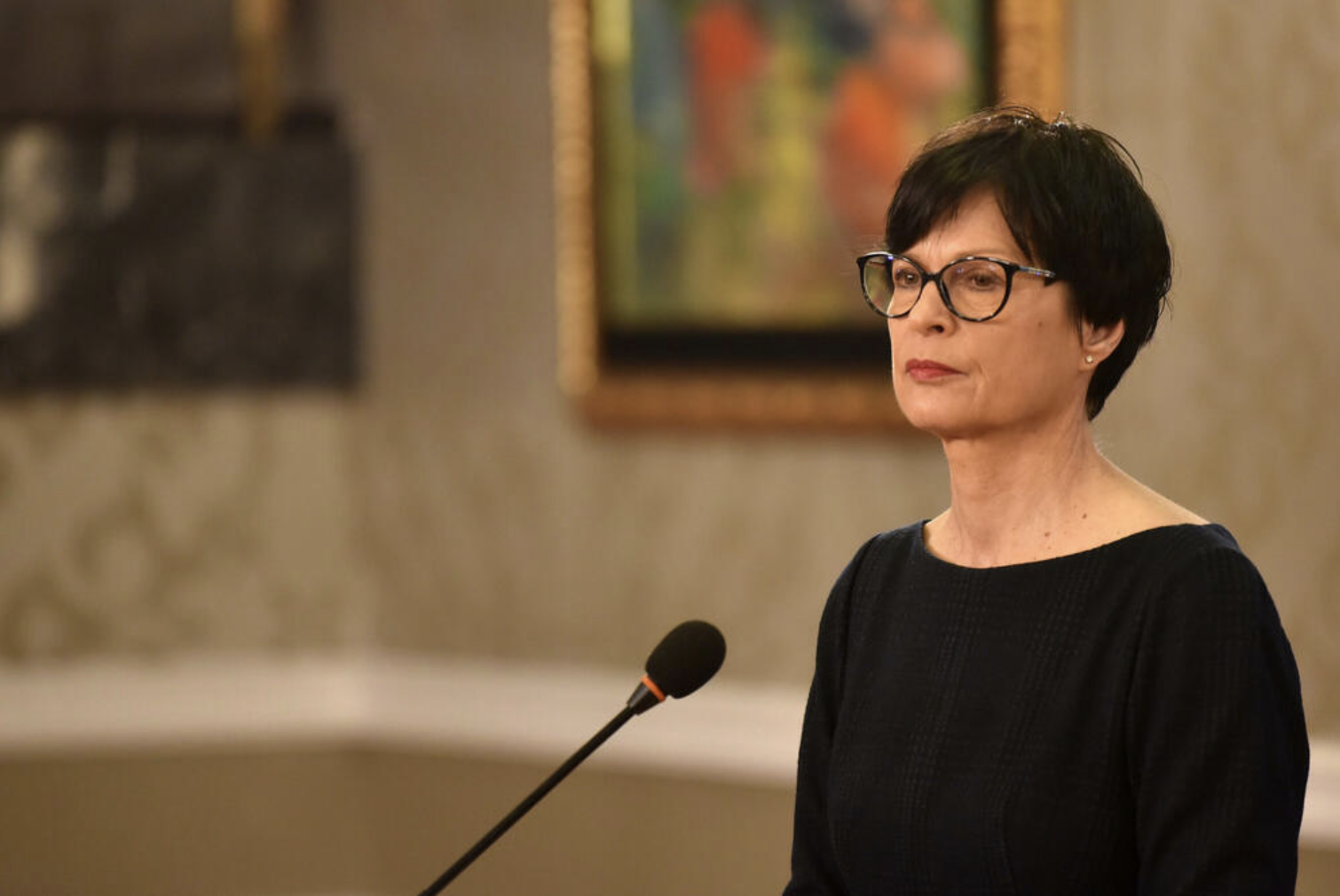
In a lecture to students at the Faculty of Political Science in Podgorica on 21 October, European Commissioner for Enlargement Marta Kos answered a student who wanted the EU to “push the government on developing the judiciary”. Kos said that citizens need to tell the politicians in power what to do: “They listen to you, but I have to say: sometimes I feel like a shepherdess watching over everything that happens in the flock…” She thanked them for giving her so much power that she can “push the government”, and added that “real transformation happens only when people feel it”. Columns, statements and posts followed, with demands for an apology. What she said in the same lecture, that “no one can be worth less”, is not mentioned in those reactions.
The question is not whether the metaphor was well chosen. The question is what the reactions to it reveal. And they reveal that no one disputes the diagnosis. One column ironically suggests what the Commissioner “could” have said: that in mountains which “do not tolerate rules” there is “a historically inherited, so to speak endemic, problem” with Chapters 23 and 24. The diagnosis, then, is accepted. Only the image is contested. The sociologist Stanley Cohen calls this implicatory denial: the facts are acknowledged, but the obligation that follows from them is denied. Conditions that are “endemic, widespread and supposedly intractable”, Cohen writes, are “not newsworthy in themselves” (States of Denial, 2001, p. 172). The news becomes the one who names them.
The diagnosis, moreover, is not the Commissioner’s. As early as 2018 the European Commission found “clear elements of state capture” in the Western Balkans. In 2022 GRECO warned of the perception that corruption in the police is widespread, and according to OSCE surveys 84% of citizens in 2021 believed that police officers were involved in corruption to a greater or lesser extent. None of the texts I analysed mentions any of these findings.
What this looks like in practice, I have written about before in these pages. We planned for recycling to reach up to 80% by 2020; the latest figure was 4.5%. The new target, 25%, was to be reached through “a new plan”. The Montenegrin legal order consisted of 47,404 regulations, some of which “must be, yet cannot be, followed”. I wrote at the time: “If the benchmarks are defined by photocopying legal texts, then we have largely met the requirements already.” We turned values into nouns, into dead letters on paper. Even good laws are no exception. The law on same-sex partnership would hardly have been adopted without strong international pressure (Kojičić, 2022, p. 21), and long after its adoption it remained without secondary legislation.
The gravest example is Pljevlja. The World Health Organization, together with the Institute of Public Health, calculated that in Pljevlja 22.2% of deaths from natural causes are attributable to air pollution: some 90 premature deaths a year, life expectancy shorter by 30.2 months, and 34% of bronchitis in children attributable to pollution (Krzyzanowski, 2016). The study was published in 2016, but it rests on data from 2010–2012. Diseases attributable to polluted air account for 10.9% of Montenegro’s total health expenditure (Panteli & Delipalla, 2022). There is no newer estimate of mortality. In 2022 the Institute replied: “Apart from the 2015/2016study, the Institute has not published estimates of the health impact of air pollution.” What the state knows about how many people in Pljevlja die from the air is, therefore, only what was measured fourteen years ago. Meanwhile, according to the state’s own data, from 2010 to 2024 Pljevlja recorded between 64 and 217 days of exceedances every year, against 35 permitted. Not in a single year was the limit respected. In December 2025, in days the mayor called the most serious environmental crisis since air quality has been measured, infants fifteen days old were admitted to hospital, about half of the children on the ward were on oxygen, and the monitoring station was out for servicing. A special law for Pljevlja adopted in 2025 set deadlines. They expired, and the office the law provided for had still not been established in June. In the first half of this year alone there were 45 days of exceedances, and on 9 September 468 µg/m³ of PM10 was measured, more than nine times the limit. Instead of emergency measures came warnings not to go outside.
For this, there was no apology. Nor any demand for one.
H. L. A. Hart, one of the most influential legal philosophers of the twentieth century, used the same image. A society in which only officials accept the rules, while citizens merely obey, “might be deplorably sheeplike; the sheep might end in the slaughter-house” (The Concept of Law, 1961, p. 114). Hart, moreover, does not place the burden on citizens. Of them he asks only that they obey the rules, “from any motive whatever”, while officials “must regard these as common standards of official behaviour” (p. 113). The thesis of a people that “does not tolerate rules” misses its address. The decisive condition of the rule of law lies with those who govern.
This is exactly where the Commissioner’s second sentence belongs. The Swedish sociologist of law Håkan Hydén states the rule simply: a law cannot have a lasting effect if it does not correspond to the norms already existing in society, because “law comes from above, while norms grow from below” (2008, p. 153). Kos says the same: she has a lot of power, but real change happens only when people feel it. Her image does not describe what citizens should be, but the condition they are to leave. A student who publicly questions the Commissioner does exactly what a flock cannot do.
Hydén also sees a country’s norms as a mirror: if a society does not recognise itself in the mirror of international standards, its norms do not reflect their content (p. 153). The reactions to the metaphor are a refusal to look in the mirror. And when disregard for rules is declared “historically inherited”, no one is responsible for it. Hannah Arendt calls such a regime “rule by Nobody”, “the most tyrannical of all, since there is no one left who could even be asked to answer for what is being done” (On Violence, 1970, pp. 38–39).
Harold Lasswell measured political power by the capacity to produce intended effects in a community. By that measure, as research on stabilitocracy also shows, the problem was never too much European oversight, but too much tolerance. Whoever sees an insult to the people in the word “flock” overlooks that the statement ties change to the people, and oversight to those in power.
Sanctions, for Hart, exist precisely “as a guarantee that those who would voluntarily obey shall not be sacrificed to those who would not” (Hart, 1961, p. 193). In Pljevlja, it is exactly they who have been sacrificed.
Why, then, was the reaction to the word louder than the reaction to the condition? Arendt supplies the answer: “no one reacts with rage … to social conditions that seem to be unchangeable. Only where there is reason to suspect that conditions could be changed and are not does rage arise” (On Violence, p. 63). A condition declared “endemic” therefore enrages no one. What enrages is the word that names it.
Author Jovan Kojicic, professor of law, a DAAD alumnus and head of the MP Logo Vox legal clinic for Vijesti.me


