THE ILLUSION OF EFFECTIVENESS (II)
The new Law on Air Protection has many deadlines. Almost every one of them postpones something: new regulations, plans, compliance, even the emergency response. While the deadlines run, the regulations that have not worked so far remain in force.
Deadlines that run backwards
Deadlines in a law usually serve to speed up its application. The 2026 Law on Air Protection uses them differently. Implementing regulations may be adopted over two years (Art. 64(1) of the Law on Air Protection). An air quality plan may wait two years from the end of the year in which the limit was exceeded (Art. 25(2)). The deadline for compliance with limit values may be postponed until 2035, or 2040 (Art. 22). Until then, the old regulations apply (Art. 64(2)) — the very regulations which, as the previous column showed, did not prevent a single year of exceedance in Pljevlja in sixteen years.
Ludwig Krämer, a long-serving lawyer of the European Commission, described the consequence of this technique: when a commitment is “general or vague, the implementation is normally poor”, because states then decide for themselves which measures to take (Krämer, 2022, p. 6). A deadline that ought to bind becomes here a deadline that permits.
An emergency measure without a trigger
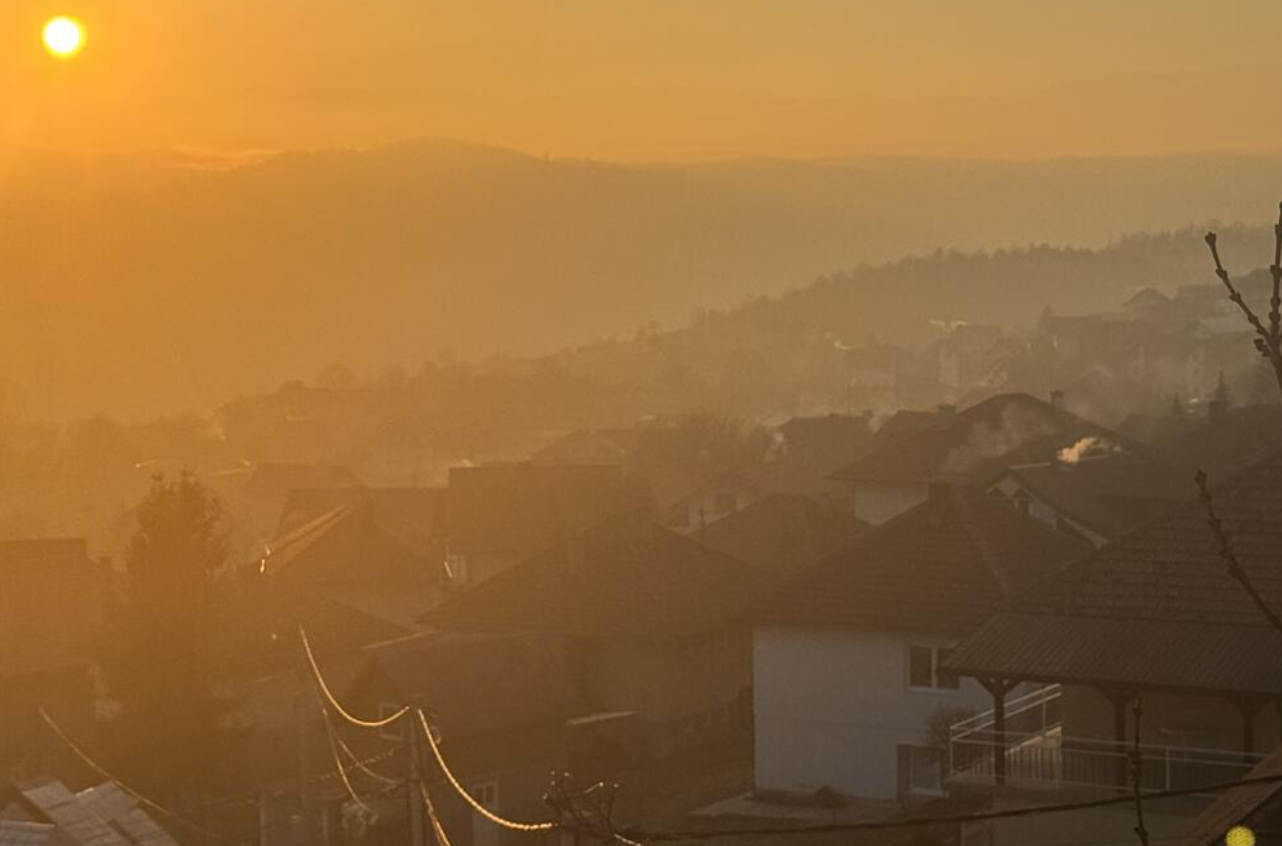
The gravest consequence of this postponement is not legal-technical, but a matter of health. The law provides that urgent measures are taken “immediately” (Art. 19(1)). Urgent measures and short-term plans (Art. 29), however, are tied to the alert threshold, which is set by the Government (Art. 6(9)). Until a new act is adopted, the Decree applies, and it sets an alert threshold only for sulphur dioxide, nitrogen dioxide and ozone (Art. 11 of the Decree, Official Gazette of Montenegro No. 25/12). For PM10 and PM2.5, the particles that are the main pollutant in Pljevlja, there is no threshold. Therefore, for them, until August 2028 at the latest, there is no legal trigger for urgent measures. In 2026 alone, by the end of September Pljevlja had 53 days of PM10 exceedance, against 35 permitted for the whole year, and not one of them triggered an urgent measure.
This became visible on 9 September 2026. The Environmental Protection Agency measured 399.3 µg/m³ of PM10 in Pljevlja at 11 a.m. and named smoke from fires as one of the main causes (Agency, 9 Sep 2026). It advised citizens to avoid outdoor activities. It could do nothing else: on that day the regulations obliged no one to do anything except give advice. The law permits this in future too — for particles, the plan may be limited to providing “easily understandable information on recommended behaviour” (Art. 29(3)). A state that responds to poison in the air with advice does not protect the citizen; it informs him that he is on his own.
And where a trigger does exist, it is not respected either. For sulphur dioxide there is an alert threshold, and since 2017 Pljevlja has also had a Short-Term Action Plan (Agency and Municipality of Pljevlja, Short-Term Action Plan, 2017). In December 2025 the threshold was exceeded, and on 14 December the Agency itself wrote that “it is necessary to urgently implement the measures provided for in the Short-Term Action Plan” (Agency, 14 Dec 2025). What was done next, and what was not, I will write about in the following columns. The new law requires the first annual report on the implementation of short-term plans only by 31 March 2027 (Art. 29).
Deterioration in silence
Postponement is not the only direction in which the law moved. Between the version of the Draft of 16 March and that of 1 July 2026, which became law, at least two guarantees were weakened. In March, the limitation period for compensation was five years from the cessation of the infringement and knowledge of the damage; in July it was replaced by the general three-year period of the Law on Obligations. From Art. 52(6) the word “timely” was deleted, from the formula under which the procedure must be “fair, equitable, timely and must not be prohibitively expensive”. For neither of these changes does the report on the public consultation give any reasons (Kojičić, Initiative to the Constitutional Court, 4 Sep 2026, para. 68; Version of the Draft of 16 Mar 2026).
The word “timely” is not an ornament. Directive (EU) 2024/2881, which the law transposes, requires a procedure that is timely (Art. 27 of the Directive). The legislature, then, transposed the European text without the word that speaks of time — in a law whose main flaw is precisely time.
A warning without an answer
The Ministry did not reply to the comments submitted in the public consultation. On 15 July the warning was also made public (Dan, 15 Jul 2026). On 21 July three parliamentary committees — the Legislative Committee, the Constitutional Committee and the Committee on Ecology — received letters proposing that the Draft not be adopted until it was brought into line with the Constitution (Kojičić, letters to the parliamentary committees, 21 Jul 2026). No answer came. The law was adopted on 31 July, without amendments on the disputed points.
I know this pattern. In 2022, after the consultations on the Government’s Work Programme, I wrote that once the process was over, “no one ever got in touch again to communicate with the participants in that process and present arguments” (Kojičić, Vijesti, 6 May 2022). A few weeks later I wrote: “Our policies are ‘plans about plans’” (Kojičić, Vijesti, 30 May 2022). A law that gives itself deadlines for future regulations belongs to the same genre, only in a higher legal form.
The European measure of time
In European law, time is not neutral. The Court of Justice of the EU found that Bulgaria had failed to fulfil “the obligation to keep the exceedance period as short as possible”, for the period from 11 June 2010 to 2014 (Commission v. Bulgaria, C-488/15, operative part, point 1). For the Court, then, even four years were too long. Pljevlja has exceeded the limit every year since 2010. If the postponement under Art. 22 is used, the period of exceedance could formally last until 2035 — twenty-five years. Montenegro is not a member of the Union, but it wants to become one. The chief negotiator announces the closure of all chapters by the end of 2026, with the aim of Montenegro becoming the newest member in 2028 (European Western Balkans, 10 Oct 2026). By the Commission’s own assessments, it is the frontrunner; but in the cluster “Green agenda & sustainable connectivity”, which includes Chapter 27 on the environment, the review for 2020–2025 records “lack of progress” (Dabrowski and Louro, 2026, pp. 10, 12, 19). Montenegro has transposed the European text on air quality into its own law; the measure of time that this text carries in Europe has been left outside it. This is not how a state that is attaining European standards behaves.
“Transitional periods are normal”
The objection is serious: every major law has a transitional period, and new rules require new implementing acts. True. But a transitional period makes sense when the old regime works while the new one is being built. Here the old regime did not work for sixteen years, and in the more precise lex specialis for Pljevlja neither of the two deadlines, of 60 and 120 days, was met. Krämer identified the same assumption in half a century of international environmental law: the belief that “it was sufficient to lay down legal objectives, principles and commitments”, and that states would then implement them on their own (Krämer, 2022, p. 4). Fifty years, he concludes, “have shown in all clarity” that agreed rules do not apply themselves (Krämer, 2022, p. 24).
A law about laws
In 2022, writing about another law, I noted: “After five years of work, the legislature has offered ‘unfinished’ rules” (Kojičić, Vijesti, 7 Jun 2022). The Law on Air Protection is not unfinished by accident. Its incompleteness is prescribed: the deadlines for regulations, plans and compliance all run in the same direction — away from the citizen. Krämer called one European programme an “action programme without actions” (Krämer, 2020, p. 660). The Montenegrin law goes a step further: it is a law on urgent measures without urgent measures for what Pljevlja breathes most. In the next column: where the state does not look.
Author Jovan Kojicic, professor of law, a DAAD alumnus and head of the MP Logo Vox legal clinic for Vijesti.me