OPINION: THE ILLUSION OF EFFECTIVENESS (IV)
For the air in Pljevlja, the state publishes two numbers. One appears in the official report, the other on its website. For August 2026, the first says four days of exceedance, the second eighteen. The state does not say which one it believes.
The second condition: knowledge
In the first column of this series I mentioned three conditions without which a legal rule does not become a norm: will, knowledge and system possibilities (Hydén, 2022, p. 10). The previous column showed that in nineteen municipalities there is no knowledge, because there is no measurement. This one shows something worse: even where there is measurement, knowledge falls apart into two numbers.
The law is clear. The public is to be provided with “up-to-date hourly data per sampling point” for PM10 and PM2.5, “if the measurement method is suitable for up-to-date data” (Art. 49(1)(1) of the Law on Air Protection). The provision is taken almost word for word from Directive (EU) 2024/2881 (Annex X).
A method that cannot do what is published
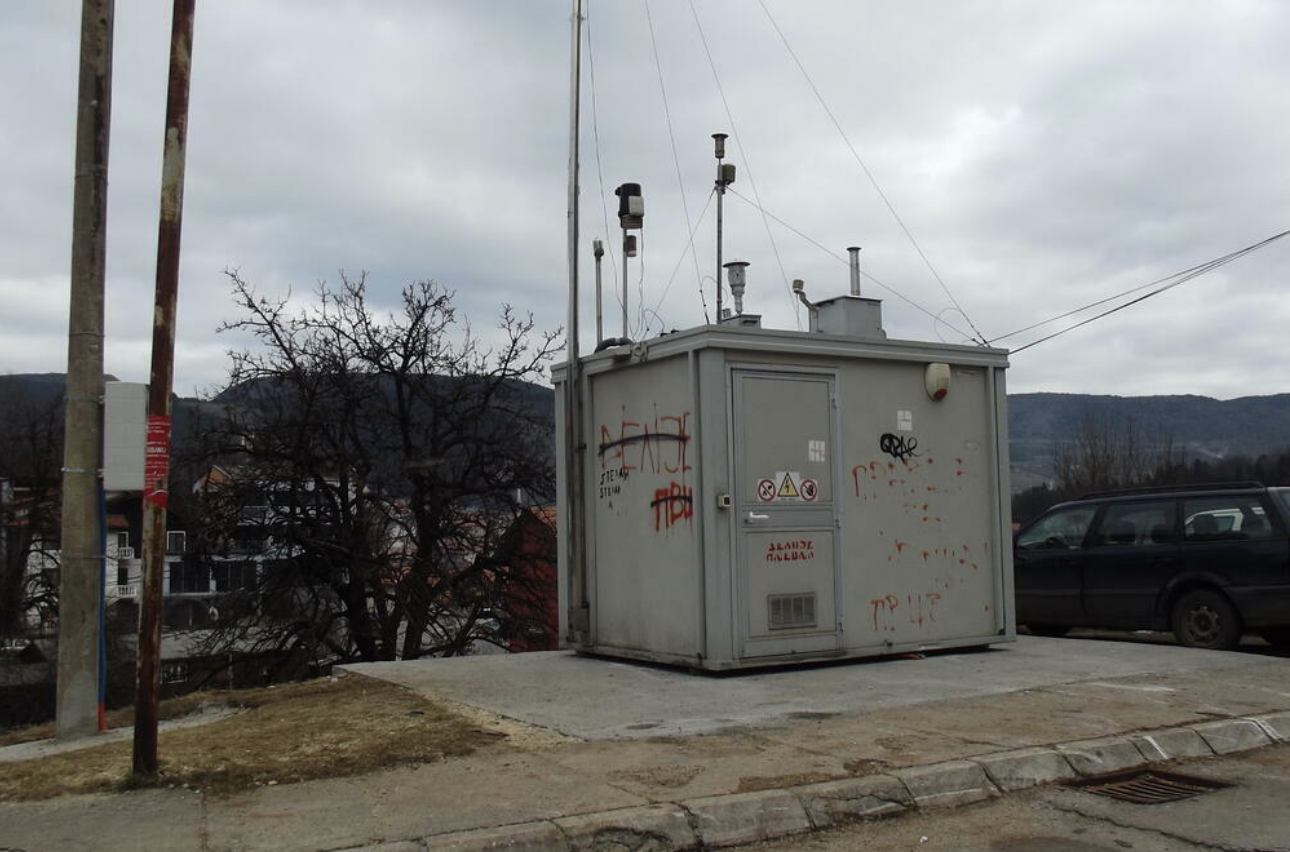
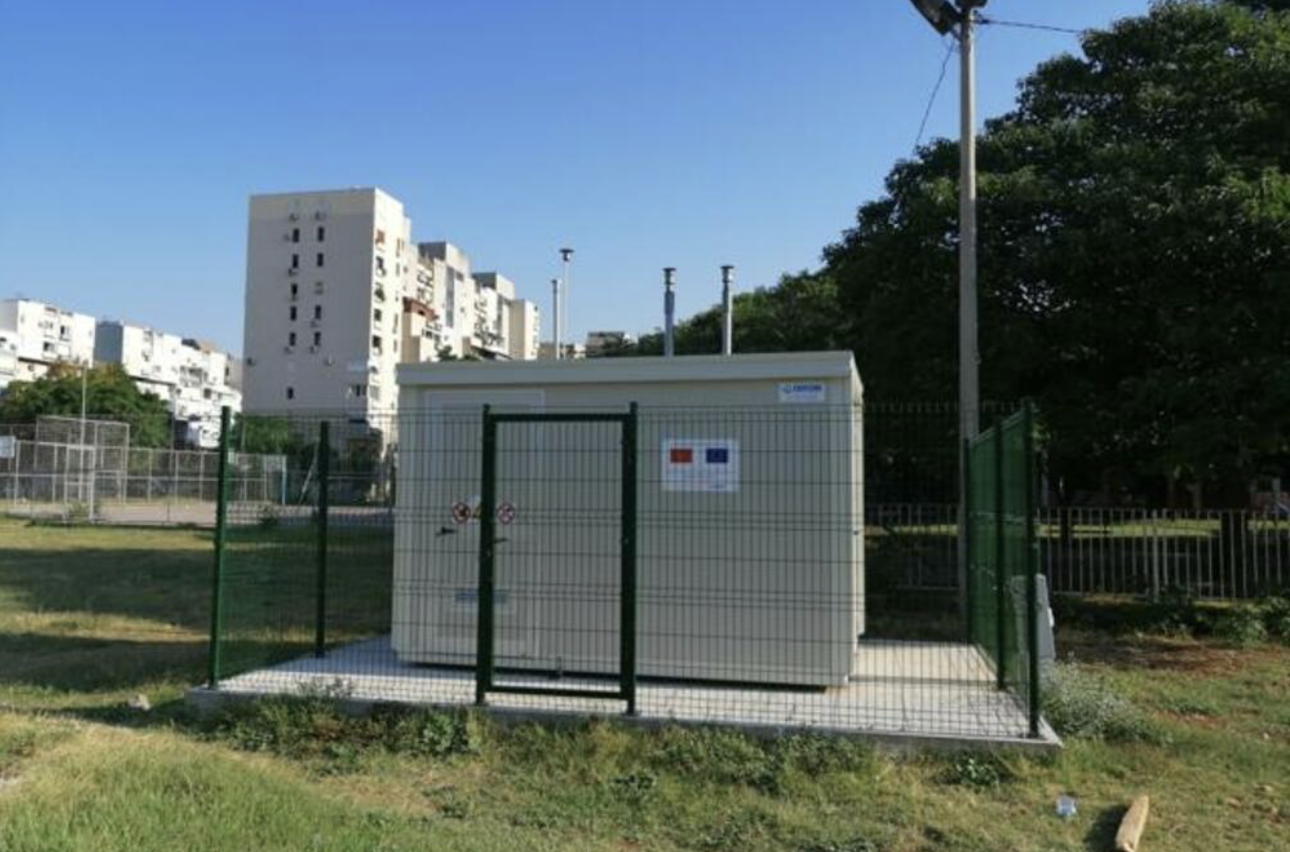
In the monthly reports, for each of the seven stations at which particles are measured, the measuring equipment for PM10 and PM2.5 is described in the same way: “Manual sampling”, “Gravimetry” (CETI, January 2026; CETI, August 2026). A filter is sampled for twenty-four hours and weighed in a laboratory, and the daily value is published in the report for the previous month. That method cannot produce an hourly value.
On the Agency’s website, however, hourly values appear in real time and in the archive (Agency, measurement archive). The Agency states: “Data from the automatic fixed stations are publicly available” (Agency, 2025, p. 10). The instrument that produces these data is not listed in the monthly reports for any station.
Four or eighteen
The two series can be compared day by day: the official daily values and the daily average of the hourly values from the archive, downloaded on 4 October 2026. In winter they roughly agree: in Pljevlja in January 2026 both series gave 26 days of exceedance each. In August they diverge, and in opposite directions. In Pljevlja the hourly archive shows eighteen days above the limit, and the official report four. In Bijelo Polje it is the other way round: on 28 and 29 August the official values were 58.27 and 64.82 µg/m³, above the daily limit of 50, while on those days the public could see averages of 33.0 and 37.3 on the website (CETI, August 2026; Agency, measurement archive).
For such measurements, the Directive requires a “consistent relationship” with the reference method (Annex VI, Part B, point 1). The ratio between the two averages in Pljevlja was 1.06 in January and 1.63 in August, and in Bijelo Polje 1.09 and 0.80. That is not a consistent relationship. That is two different airs.
Fifteen months of silence
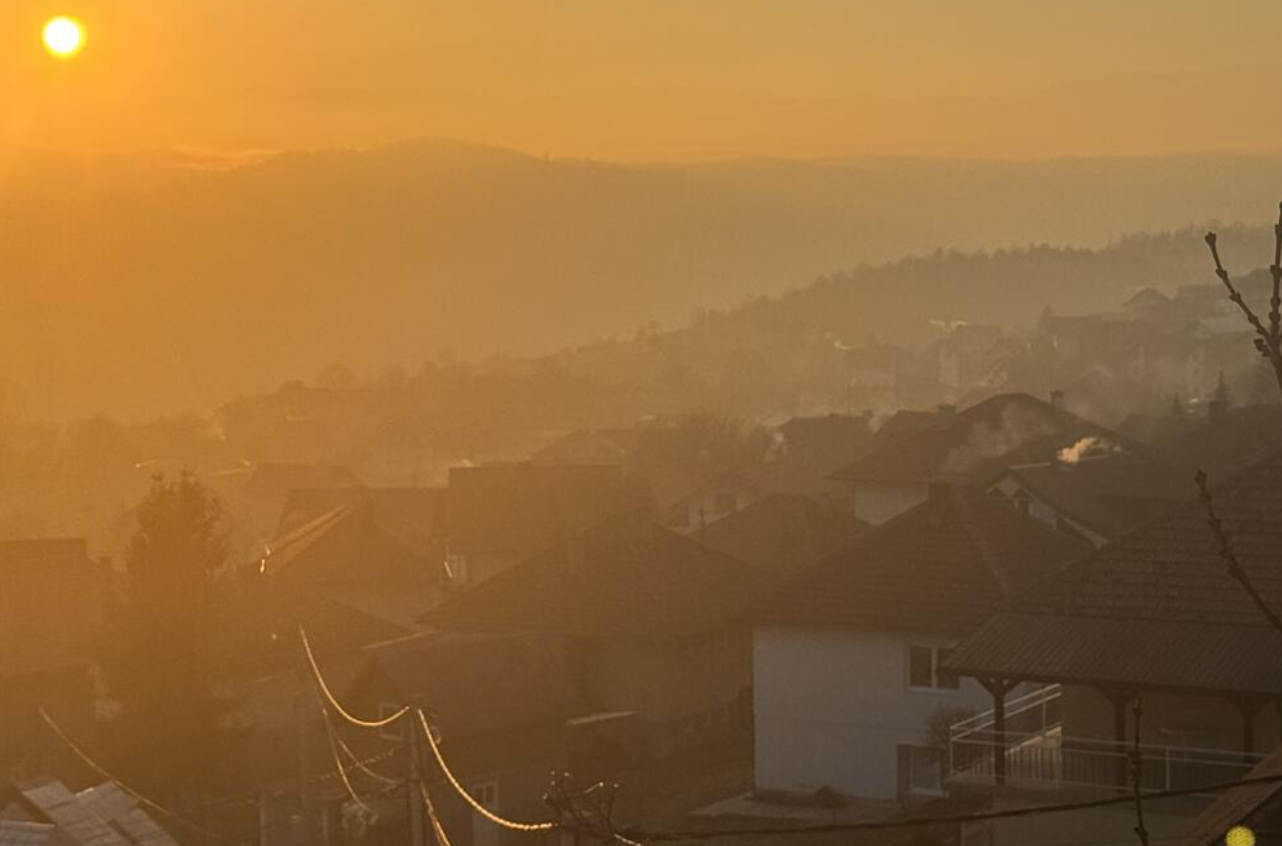
In the public archive for Pljevlja there is not a single hourly value for PM10 or PM2.5 from 17 December 2020 to 30 March 2022, while for sulphur dioxide and nitrogen dioxide there are (Agency, measurement archive). Through two heating seasons, the residents of the most polluted town could not see what they were breathing while they were breathing it. The Agency itself, incidentally, wrote back in 2018 about the right of the citizens of Pljevlja “to be informed about air quality as soon as possible” (Agency, 2018).
In August 2022 the station again gave no data on particles. The Agency told a local portal that they “were not aware of that problem” (PV Informer, 2022); the archive confirms an interruption from 26 to 29 August. Today the law obliges the Agency to inform the public “of all problems in meeting the data coverage requirements” (Art. 48(1)(2)).
The pattern is not new. In March 2023 I wrote: “The Institute has not informed us about the key threats and consequences for public health of multiple, frequent and long-term exposure to PM particles” (Kojičić, Vijesti, 2 Mar 2023). A different institution, the same failure.
Two answers, one conclusion
The state can answer this in only two ways. First: the hourly values are valid. In that case it had to demonstrate their equivalence with the reference method (Art. 17(2)), and the numbers would agree. They do not — and if they are valid, Pljevlja had eighteen, not four, days of exceedance in August 2026. Second: the hourly values are not valid. In that case the public receives a number the state does not stand behind, and does not receive the hourly data the law grants it. In either case, Art. 49 is not complied with. This follows not from anyone else’s assessment, but from the reports the state publishes itself.
There is also a judicial consequence. The 2025 judgment mentioned in the third column relied on data from the state station. Whoever sues for August 2026 will have to choose between four and eighteen. A state that has the data but does not say which figure is valid shifts the burden of that uncertainty onto the one who breathes.
Krämer described this pattern across half a century of international law: states “have the habit of reporting –at best– on measures taken, but not on results achieved, and normally do not report on omissions”, and verification of the data transmitted takes place “only seldom” (Krämer, 2022, p. 10). Where the law has succeeded, as in the protection of the ozone layer, a group of experts “continuously verifies the data” (Krämer, 2022, p. 15).
The yardstick of accuracy
In 2022 I quoted Edward Bernays, the father of modern public relations: whether propaganda is good or bad “depends upon the merit of the cause urged, and the correctness of the information published” (Kojičić, Vijesti, 8 Apr 2022). Data on air are not propaganda, but they are measured by the same yardstick: they are worth as much as they are accurate. A number the state does not stand behind is not information. It is noise — and in noise one can neither protect health nor prove damage in court. In the next column: a thermometer removed mid-fever.
Author Jovan Kojicic, professor of law, a DAAD alumnus and head of the MP Logo Vox legal clinic for Vijesti.me