OPINION: THE ILLUSION OF EFFECTIVENESS (III)
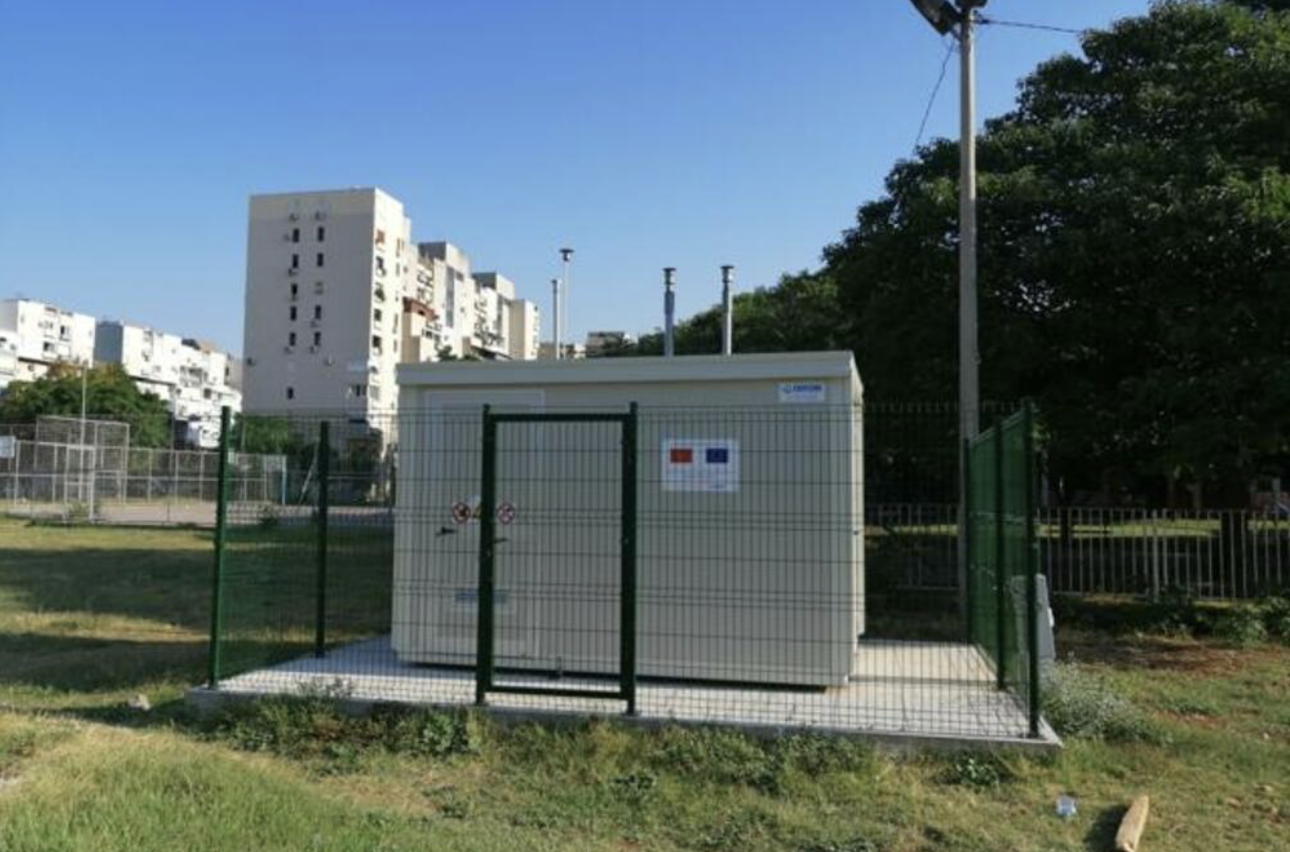
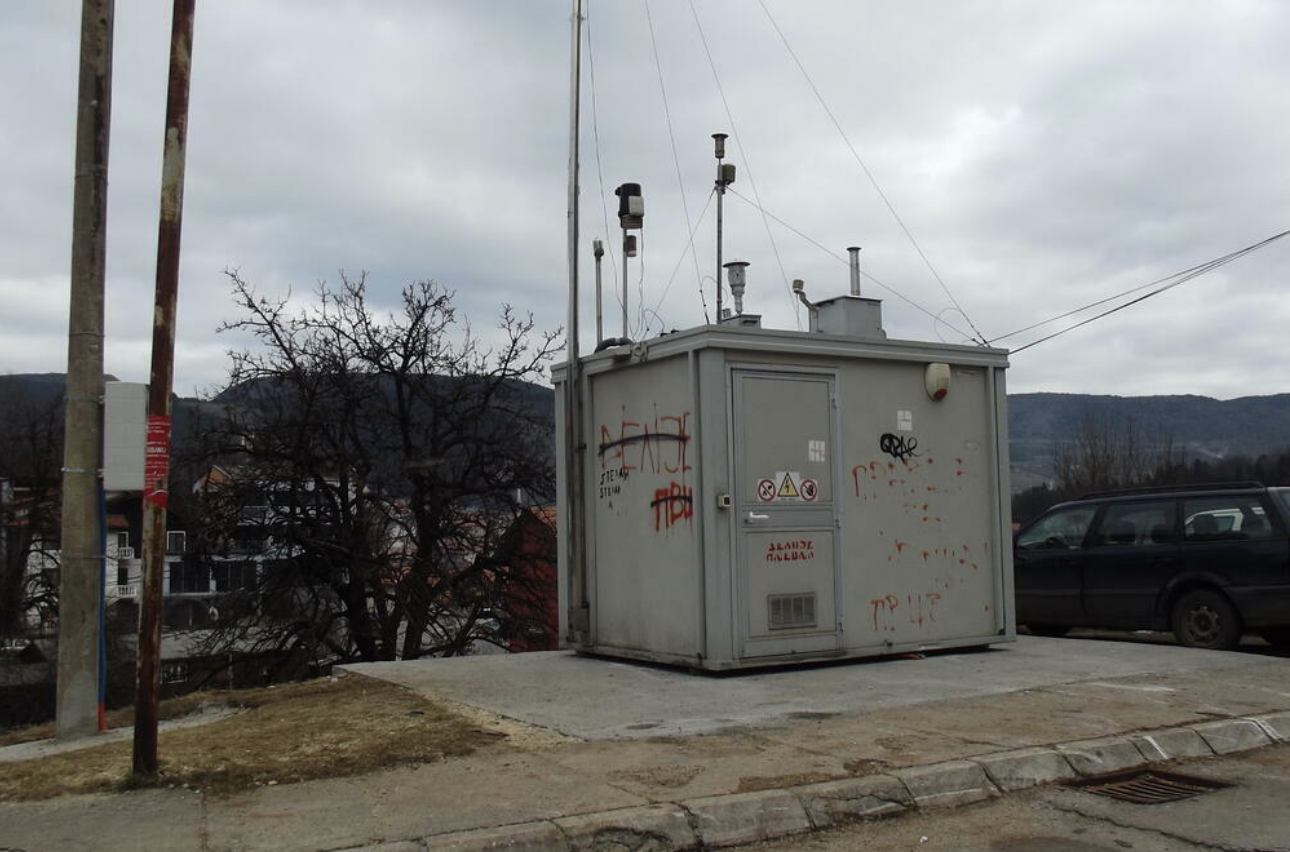
In Montenegro, the right to clean air has a geography. It exists where a monitoring station stands, and only to the extent that the station works. In nineteen of the twenty-five municipalities, the state does not measure particulate matter in the air.
Six out of twenty-five
The state air quality monitoring network consists of nine stations (Agency, 2025, p. 11). PM10 is measured at seven of them: in Pljevlja, Bijelo Polje, Podgorica (two stations), Nikšić, Bar and Kotor (CETI, 2026, pp. 9, 23, 31, 39, 48, 56 and 64). That is six municipalities out of twenty-five (MONSTAT, 2024). In the other nineteen, particles are not measured — precisely the pollutant for which, as the previous column showed, there is not even a trigger for urgent measures until 2028.
The Agency nevertheless claims that “optimal territorial coverage” has been established and that the sampling points are “representative” (Agency, 2025, p. 10). By the state’s own yardstick, an urban background station is representative “for an area of several square kilometres” (Art. 6(3) of the Decree on the Establishment of the Network of Sampling Points, Official Gazette of Montenegro Nos. 44/10, 13/11 and 64/18). A few square kilometres are not a zone, let alone a state.
A zone without measurement
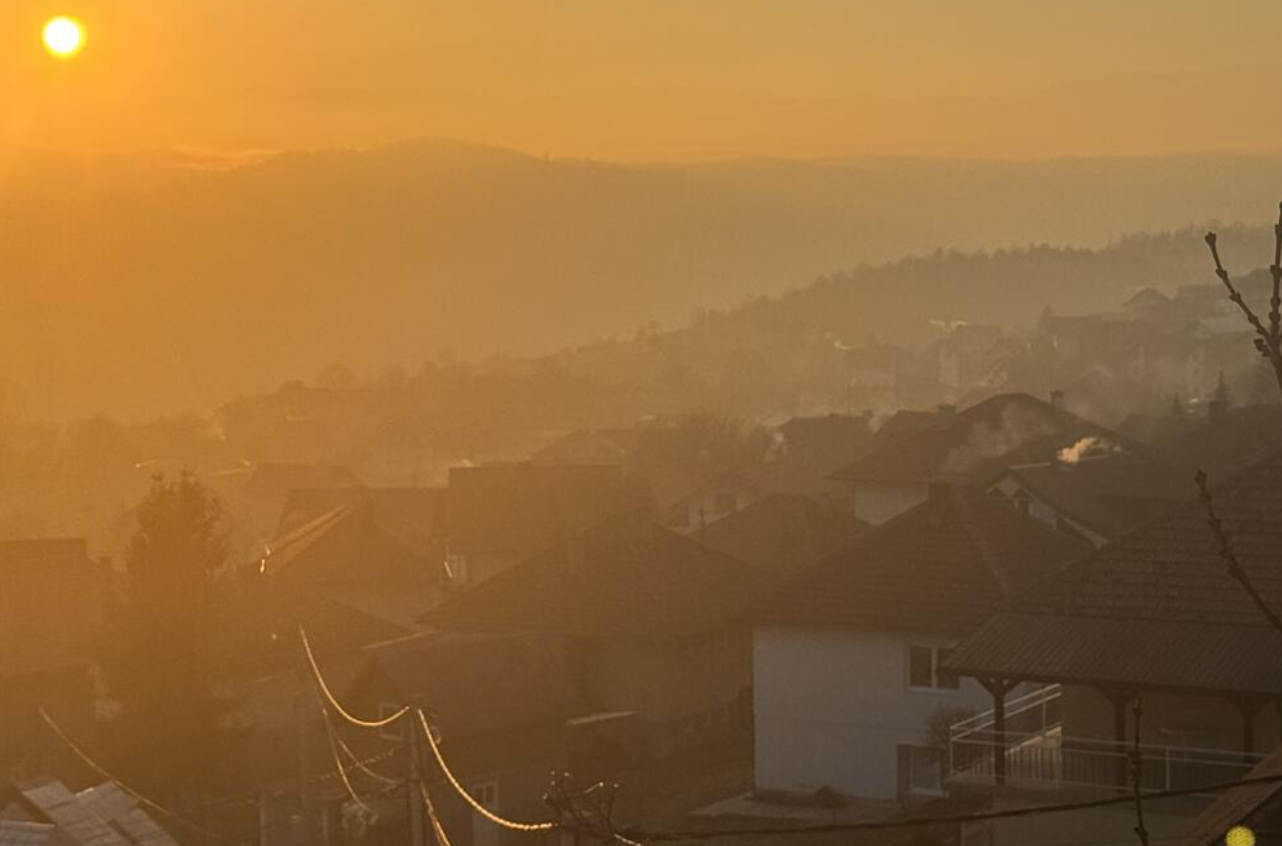
The Decree divides Montenegro into three zones. The central zone consists of Podgorica, Nikšić, Danilovgrad and Cetinje, yet stations exist only in Podgorica and Nikšić. Tuzi and Zeta are not listed in any zone. For Cetinje, the annual reports for 2021, 2022 and 2024 contain not a single item of air quality data; the Old Royal Capital is mentioned only as a member of the zone (Agency, 2022, pp. 9 and 23; Agency, 2023, pp. 10 and 24; Agency, 2025, pp. 10 and 25). The only measurement lasted fourteen days, in August 2025, with a mobile station, and the results were to serve merely “as guidelines for further measures” (Cetinjski list, 2025). It was measured in summer, outside the heating season. In July 2026 residents of the Gruda and Donje Polje neighbourhoods launched a petition over smoke, “after years of unsuccessful efforts” (Cetinjski list, 2026). Citizens complain about smoke, and the state has not a single number with which to answer them.
Measure, and you will find
When the state does measure, it finds what it otherwise does not see. In November and December 2022, the mobile station of the Capital City recorded 13 days of exceedance on Josip Broz Boulevard in Podgorica, and 9 in the Zagorič neighbourhood. The Agency links this “to emissions from individual heating stoves during the heating season” (Agency, 2023, p. 21). Individual heating stoves exist in all twenty-five municipalities.
In March 2023 I wrote that the data compiled by the state “reflect only annual averages and do not reveal the daily or maximum level of pollution” (Kojičić, Vijesti, 9 Mar 2023). I also cited an independent measurement in Pljevlja: while the researchers’ station near the power plant was recording very high values, the state station in the town “did not register measurements exceeding the average daily limit” (ibid.; Zarić et al., 2021). So even a station does not see everything, even in its own town.
A right that depends on one’s address
The consequence is not statistical, but legal. In February 2025 the Basic Court in Podgorica upheld the claim of E.H., a resident of Pljevlja, and awarded her 1,500 euros in compensation for non-pecuniary damage. According to her legal representative, the judgment relied on data from the state station in Pljevlja, which showed 124 days of exceedance; around a hundred residents of Pljevlja are preparing identical claims (Kojičić, Initiative to the Constitutional Court, 4 Sep 2026, para. 63). An identically ill person from Cetinje has no such evidentiary basis — solely because of where he or she lives.
The law does not correct this. It leaves the choice of sampling points to the executive, without statutory criteria (Arts. 10–12 of the Law on Air Protection). Yet the legislature knew how to limit discretion when it wanted to: it prohibited relocating a station that had recorded exceedances in the previous three years, save for specially justified reasons (Art. 12(8) and (9)). For the first and decisive step — where a station will stand at all — there is no such rule.
The international yardstick
In Craeynest, the Court of Justice of the EU held that it is for a national court, on an application by individuals directly affected by the exceedance, “to verify whether the sampling points located in a particular zone have been established in accordance with the criteria” of the directive and, if they were not, “to take all necessary measures in respect of the competent national authority” (Craeynest, C-723/17, operative part, point 1). The location of a station is therefore a legal question, not a matter of technical discretion. The European Court of Human Rights regards residence as “an aspect of personal status” (Carson and Others v. the United Kingdom, 2010, § 76). The same holds under the International Covenant on Economic, Social and Cultural Rights, which has applied to Montenegro since 2006. The UN Committee expressly names “place of residence” as a ground of discrimination: the exercise of Covenant rights “should not be conditional on, or determined by, a person’s current or former place of residence”, and “disparities between localities and regions should be eliminated in practice” (UN Committee on Economic, Social and Cultural Rights, General Comment No. 20, 2009, § 34). A right that depends on one’s address thereby becomes a question of discrimination — under the Covenant and under the Constitution (Arts. 8 and 17). I warned the parliamentary committees of this as early as July (Kojičić, letters to the parliamentary committees, 21 Jul 2026).
Nor are the European criteria flawless. Of the siting criteria for sampling points, the textbook Environmental Law says that they almost seem “designed to provide the least amount of protection to some of those who may need it most, such as children exposed to traffic fumes” (Bell, McGillivray et al., 2017, pp. 570–571). The Montenegrin law does not even have those criteria.
“There cannot be a station in every village”
True, and no one is asking for that. Where there is no station, concentrations can be estimated by modelling; science has methods for this (Shan et al., 2024, p. 7), the law provides for it (Arts. 12 and 17), and UNECE recommends it to Montenegro (UNECE, 2025, p. 120). The Agency’s annual reports for 2021, 2022 and 2024 contain not a single such estimate for any municipality without a station. The problem, then, is not that there is no station in every village, but that the state does not try to find out what is being breathed where there is none.
Everything is local
Krämer warns that pointing out the non-application of environmental law “has necessarily to start at local level”: it makes no sense to deplore the non-application of international law “when the national, regional or local application” of environmental provisions is “ignored or accepted” (Krämer, 2022, p. 23). In 2022 I noted that we did not even have national surveys “on the impact of air pollution on human health” (Kojičić, Vijesti, 29 Mar 2022). Four years later, for nineteen municipalities there is not even measurement. An exceedance that no one measures enters no report, no lawsuit, no judgment. For the state, it does not exist. For the one who breathes, it does. In the next column: two numbers for the same air.
Author Jovan Kojicic, professor of law, a DAAD alumnus and head of the MP Logo Vox legal clinic for Vijesti.me